5 whale species you can spot in the Canary Islands
The Canary Islands are one of the best places in the world for whale and dolphin watching. Their deep, nutrient-rich waters, close to the coast, turn the archipelago into a genuine natural sanctuary where more than 30 cetacean species live or pass through all year round. In this guide we cover the 5 most emblematic whale species you can encounter, how to identify them, and the best tips to make your experience unforgettable.
---
1. Short-finned pilot whale (Globicephala macrorhynchus) — The faithful resident
The short-finned pilot whale is the undisputed star of Canarian waters. It is by far the most frequently sighted species: there is an estimated resident population of around 400-500 individuals in south-west Tenerife and southern Gran Canaria alone, which guarantees sightings all year round with success rates above 95%.
How to recognise it
Size: 4-6 metres (males up to 7 m)
Colour: Deep black or very dark grey
Head: Rounded, bulbous, with no distinct beak (hence its name)
Dorsal fin: Wide, rounded and set well back, with a very broad base
Behaviour: Slow swimmers, often resting at the surface (*logging*); tight-knit groups of 10-30 individuals
Where and when to see it
Top area: The channel between Tenerife and La Gomera, south-west Gran Canaria (Puerto Rico, Mogán)
Season:All year round — it is sedentary and does not migrate
Best time: Early morning (calmer sea) or late afternoon
> Fun fact: Pilot whales belong to the dolphin family (Delphinidae), not the true whales. They are extremely social and have their own dialects for each family group.
---
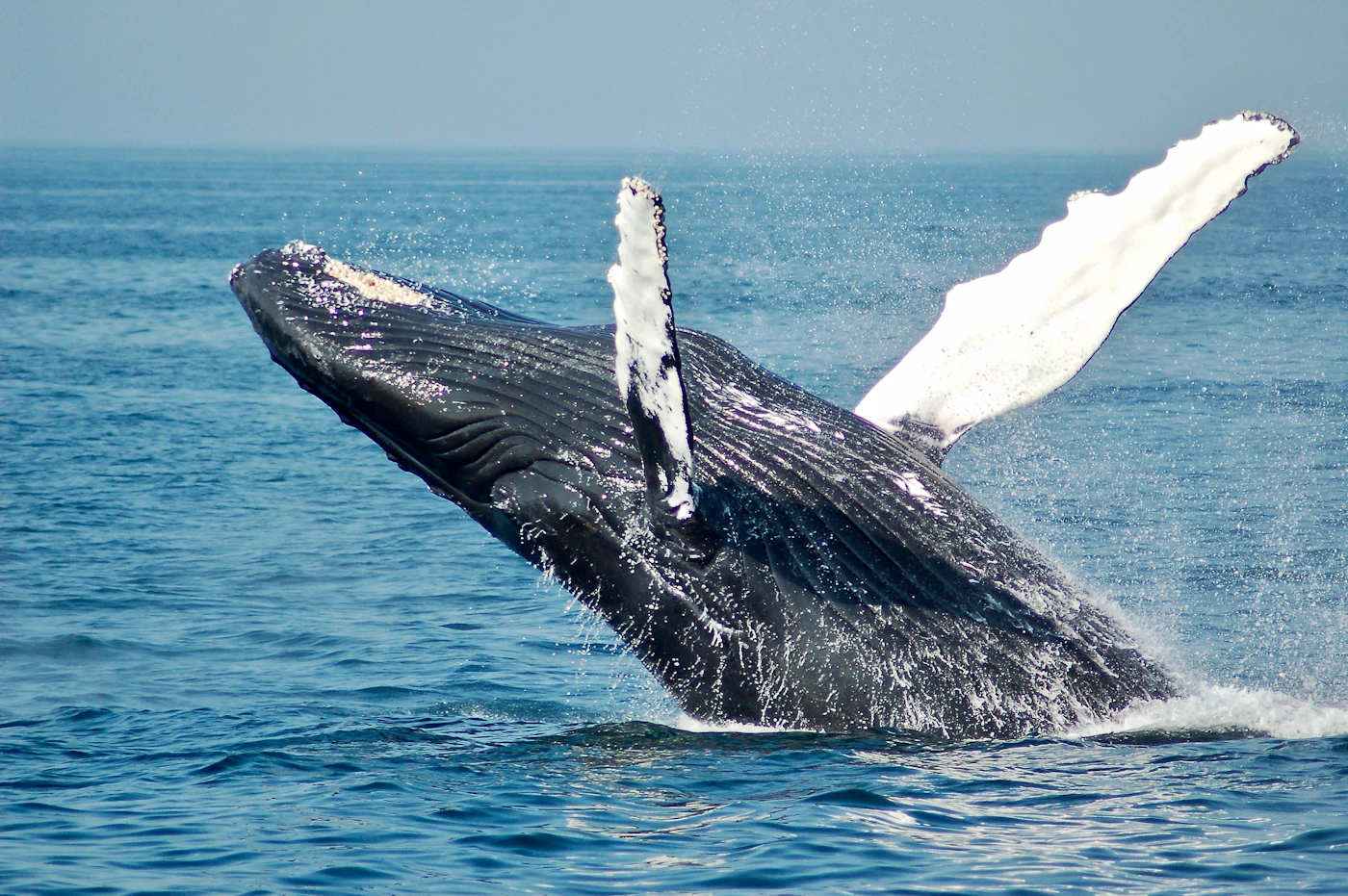
2. Fin whale (Balaenoptera physalus) — The giant of the Atlantic
The fin whale is the second largest animal on the planet (surpassed only by the blue whale). In the Canaries it is not a resident, but it passes through regularly on its migratory routes between feeding grounds in the north and breeding grounds in the south.
How to recognise it
Size: 18-24 metres (females larger than males)
Colour: Slate grey on the back, white on the belly
Head: V-shaped, asymmetrical (left jaw grey, right jaw white)
Blow: Tall, columnar, 4-6 metres, visible from a great distance
Dorsal fin: Small, falcate, set well back (final third)
Behaviour: Fast swimmer, a sequence of 5-8 blows followed by a deep dive (5-15 min); rarely shows its tail when diving
Where and when to see it
Top area: Deep waters north of Gran Canaria, west of Fuerteventura, the channel between the eastern islands
Best time: Any time with good visibility; requires calm seas (Beaufort ≤ 2)
> Conservation: Listed as Vulnerable (IUCN). The Canaries are a critical migration corridor; shipping traffic and underwater noise are its greatest threats here.
---
3. Sperm whale (Physeter macrocephalus) — The king of the deep
The sperm whale is the largest toothed predator in the world and the deepest-diving cetacean (down to 2,000-3,000 m). In the Canaries there is a resident and semi-resident population, especially in south-west Gran Canaria and the waters between Tenerife and La Gomera.
How to recognise it
Size: 11-18 m (males much larger than females)
Colour: Dark grey to brown, with characteristic wrinkled skin
Head:Enormous (1/3 of the body), square, with the blowhole set to the left
Blow: Low, angled 45° to the left, very distinctive
Dorsal fin: A low, rounded hump + a series of dorsal "knuckles" behind it
Tail: Broad, triangular, always shown at the start of a deep dive
Behaviour: Dives of 30-60 min; 8-12 min at the surface breathing; often in groups of females with calves
Where and when to see it
Top area: South-east Gran Canaria (Taliarte, Pasito Blanco), south-west Tenerife
Season:All year round — resident population
Best time: Midday to early afternoon (they dive more when there is more light for their prey)
> Fascinating fact: Its brain is the largest in the animal kingdom (up to 8 kg). It uses high-intensity *clicks* (230 dB) to "see" by sonar in the total darkness of the depths.
---
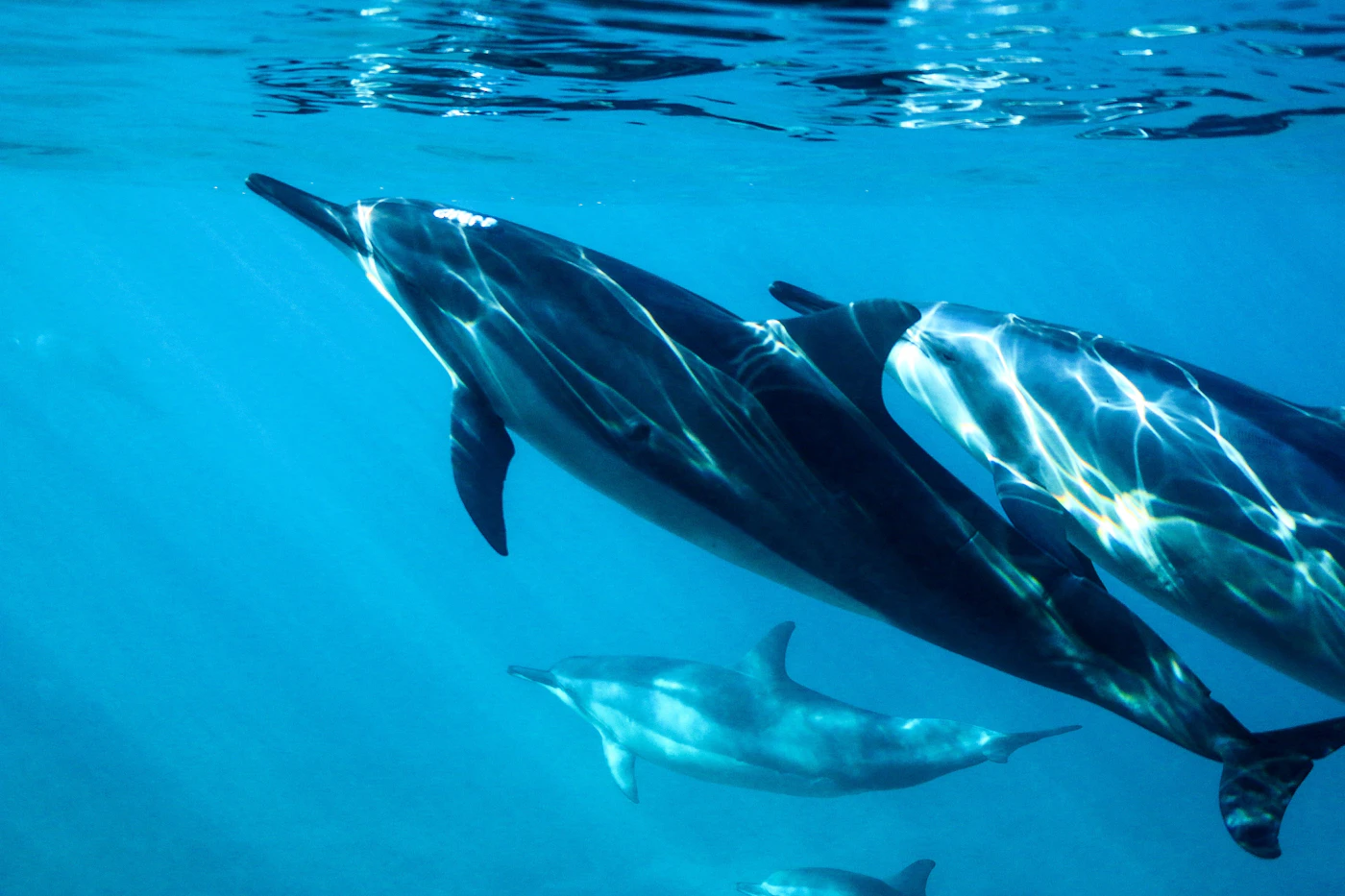
4. Bryde's whale (Balaenoptera edeni) — The great unknown
Bryde's whale (pronounced *broo-dess*) is a medium-sized rorqual of warm-temperate waters. In the Canaries it is resident all year round, but its elusive behaviour and resemblance to the fin whale mean it often goes unnoticed.
How to recognise it
Size: 12-16 metres
Colour: Dark grey on the back, throat with prominent ventral pleats
Head:Three longitudinal ridges on the rostrum (the only whale with 3 ridges)
Blow: 3-4 metres, dense and columnar
Dorsal fin: Falcate, upright, in the final third — taller and more curved than the fin whale's
Behaviour: Swims erratically, with sudden changes of direction; often feeds at the surface (lunge feeding); shows its head when surfacing to breathe
Where and when to see it
Top area: Waters between Gran Canaria and Fuerteventura, south of Lanzarote
Season:All year round — resident Canarian population
Best time: Morning with a flat sea; look for concentrations of fish (anchovies, sardines) and seabirds
> Identification key: If you see a medium rorqual that shows its head when breathing, has 3 ridges on the snout and a taller, more curved dorsal fin, it is a Bryde's. The fin whale has only 1 ridge and a smaller fin.
---
5. Cuvier's beaked whale (Ziphius cavirostris) — The ghost of the depths
Cuvier's beaked whale holds the world diving record: 2,992 metres deep and 222 minutes without breathing. It is the most elusive cetacean in the Canaries, yet the archipelago is home to one of the best-studied populations in the world (especially off El Hierro and southern Tenerife).
How to recognise it
Size: 5-7 metres
Colour: Variable: slate grey, brown, whitish; heavily scarred males (white) from fights and predators
Head:Short beak ("goose-beak" type), bulging forehead, two teeth in the lower jaw (males only, visible when breaching)
Blow: Low, diffuse, hard to see
Dorsal fin: Small, triangular, set well back
Behaviour:Extremely elusive; avoids boats; deep dives of 40-60 min; only 2-3 min at the surface; often alone or in groups of 2-3
Where and when to see it
Top area: Deep waters (>1,000 m) south of El Hierro, south-west Tenerife, south of La Palma
Season:All year round — resident
Best time: Requires an absolutely flat sea (Beaufort 0-1) and a lot of patience; a trip by zodiac or small boat
> A realistic note: Seeing a beaked whale in the Canaries is a rare privilege. Most sightings are chance encounters during crossings to deep-diving trips or aboard research vessels. If you see one, you have had the kind of luck worth telling.
---
Summary table: 5 Canarian whales at a glance
| Species | Size | Resident | Best season | Difficulty | Star zone |
3. Stable climate: 300+ days of sun a year, moderate trade winds → almost continuous operations
4. Unmatched diversity: 30+ cetacean species (resident, seasonal, occasional) along 500 km of coast
5. Pioneering research: University of La Laguna, SECAC, Gesellschaft für Meeressäugetiere — decades of data
---
Live the experience with OWA
At OWA Wild Adventure we set out from Puerto Rico (Gran Canaria) and Costa Adeje (Tenerife) with:
✅ Boats for 10-12 people (total respect, no crowding)
✅ A certified marine biologist guide on every trip
✅ A professional hydrophone to listen to the ocean
✅ 98% success with pilot whales + frequent sightings of sperm whales, bottlenose and spotted dolphins and turtles
✅ A swim in a secret cove included (*Ocean Giants Cruise* activity)
✅ Photos of the experience for free
✅ Strict ACCOBAMS code of conduct
> Ready to meet the giants of the Atlantic?
>
> 👉 [Book your Ocean Giants Cruise](/activity/ocean-giants-cruise) — 4 hours, from €40
>
> *Questions? [Write to us](/contact) and we'll advise you with no obligation.*
---
Frequently asked questions (FAQ)
Which whale is guaranteed 100%?
None is 100% guaranteed (they are wild animals), but the short-finned pilot whale comes close to 98-99% success on specific trips from SW Tenerife and S Gran Canaria.
Can I see blue whales in the Canaries?
Very rare. There are sporadic records (last confirmed: 2017, 2021) in deep northern waters. It is not a realistic target for a commercial excursion.
Is morning or afternoon better?
Early morning (first slot 9-10 am): calmer sea, better light for photos, animals more active at the surface. Afternoon: nice golden light, but more trade wind.
What if we don't see anything?
At OWA, if there is no pilot whale sighting on the *Ocean Giants Cruise*, we invite you to repeat for free on the next available trip (subject to availability).
Does seasickness affect the experience?
Yes. A small boat = more movement. Take motion-sickness medication/caffeine 30 min beforehand, look at the horizon, stay in the centre of the deck. If you feel very seasick, tell the crew: they have protocols.
---
*Article written by the team of biologists and guides at OWA Wild Adventure. Last updated: July 2025. Sighting rates and areas may vary depending on the season and oceanographic conditions.*